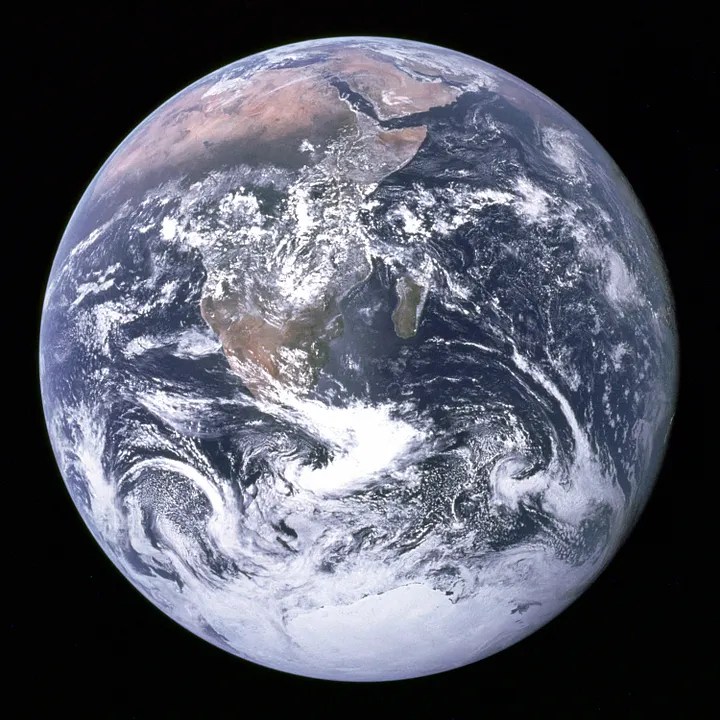
“We are as gods and might as well get good at it.”
— Steward Brand, The Whole Earth Catalog
How many of the choices you make on a daily basis are you actually aware of?
At first glance, it might appear the answer is “most of them” — but is that really true?
Some smack you in the face: what to eat for lunch, or what shirt to wear. Many of these are fairly innocuous and low-stakes. We’re typically pretty cognizant of when we’re making a high-stakes choice: whether to marry someone; whether to buy a home; whether to embark on a career as an experimental test pilot.

All pretty obvious so far.
We can get into trouble when we don’t realize we’re making a decision.

The line dividing conscious from unconscious decisions isn’t fixed. Think about when you first drove a car. Everything you did was a conscious decision: putting your foot on the brake, turning on the ignition, shifting into reverse, checking your mirrors and looking behind you, slowly releasing the brake pedal, and so on. Once you’ve been driving for a few years none of that is conscious anymore. You just do it.
Of course, you can go the other way and become more aware that you’re making decisions if you want. While it’s unlikely you’d ever want to become more aware of the decisions you make in order to drive a car, or walk down the block, it’s probably advantageous to be more aware when you’re making a decision about how you assign meaning to an event in your life. (What would you do differently if you chose to view an event as a setback or an opportunity, instead of defaulting to calling it a failure?)
Choosing to become more aware of our decisionmaking is by far the exception, and with good reason. Most things we do in life we want to spend less time thinking about. That’s what learning is: learning to drive a car, learning to play tennis, learning to ride a bike, learning to read, learning to speak a foreign language, learning to play guitar, and so on.

There are a lot of things that happily inhabit the bottom-left box because they’re things you want to make second-nature. If you’ve ever watched a supremely talented musician — or if you are a supremely talented musician — you’ll notice they’re rarely consciously thinking about what they’re doing: they’re just doing it. You’re witnessing pure artistic expression, channeling emotion into sound. The same beauty can come from witnessing any supremely talented person perform, whether it’s tennis, chess, or even a trial lawyer.
However, there are some things we learn that we don’t really mean to learn, or don’t realize we learn, and would probably benefit from un-learning.
Un-learning is tricky. Can you un-learn to ride a bike? Can you un-learn to read? Some un-learning happens by itself: if you don’t speak a foreign language, your grasp of it recedes; if you don’t practice a musical instrument, your proficiency will ebb.
The most pernicious things we learn are (a) not learned intentionally; and (b) not easily un-learned because we do them repeatedly, habitually, without realizing it, either because we want to do them or doing them serves us in some way. This creates sticky behaviors that ultimately have significant unforeseen consequences on our lives. We’ve conditioned ourselves into them.

One thing many of us have learned without necessarily realizing it: that when we’re bored, we can just pull out our phone and scroll. By repeating that behavior, we condition ourselves to respond to that uncomfortable twinge of boredom by reaching for the Skinner box in our pocket to provide a soothing hit of dopamine.
Now, before we get too far here: this is not going to be some tendentious, moralizing diatribe about the ills of smartphone addiction and the virtues of dopamine fasting. Cutting back on smartphone usage is a red herring because these diversions — these dopamine vortices — are everywhere. To focus on the smartphone is to miss the point.
Quit Instagram and there’s still an infinite feed on LinkedIn to hook you. Remove the apps from your phone and they’re still available on your computer or TV. Nuke all social media and you’re still left with Netflix, HBO, sports, video games, news, books, magazines, emails, text messages, WhatsApp — all vying for your attention, whether they interrupt your life with a notification or merely hover in the bardo of your consciousness.
At the end of the day, your attention is the only truly finite currency.
And while it’s fashionable to rail against the brightest minds of this generation deploying their talents to get you to click ads, check feeds, and scroll, and to blame technology for penetrating every last lacuna in our lives from the toilet to the elevator to the moment before we fall asleep next to our beloved — at least, on some level, most of us are aware that we’re choosing it.
What about the things we’re not even aware that we’re choosing? The decisions that so deeply color our existence that we’re not even aware they exist, or were ever consciously made to begin with?
Foremost amongst these is the decision about who you are.
Make no mistake, it is a choice. Every day you choose to inhabit an identity based on stories you’ve accepted and internalized about yourself. It could be something facile like calling yourself a Yankees fan or a Mets fan; Democrat or Republican; Christian, Muslim, Hindu, or Jew (etc.); book-smart or street-smart; hardworking or lazy; athletic or clumsy; successful or could’ve-been-a-contender, and so on. Or it could be subtle internal beliefs revealed in your behavior: attachment styles, upper limit problems, or even extraversion vs. introversion. Each of these anchors our identity and our behaviors but is no more binding than a rope of sand.
We’re mostly deeply unaware of how tenuous our identity is, yet many of the actions we take every day are in service of reaffirming that illusory identity. We choose our relationships — romantic, platonic, and professional — based on our conception of who we are: we associate with people reflect our story back to us. Play tennis against someone better than you, and you’ll play up. Play against someone worse, you’ll play down. Hang out with successful people and you’ll feel more successful and ambitious. Hang out with people who make art and you’ll be more inclined to try your hand at something creative. Your thoughts, your ambitions, and what you believe is true about yourself and what is possible in the world are constrained by what you permit yourself exposure to. (This is why you are the average of the 5 people you spend most of your time with.)
Whether we’re conscious of it or not, we make decisions every day that re-create our reality. It’s like when the Ghostbusters encounter Gozer the Gozerian: despite trying not to, they inevitably — reflexively — choose the form of their destructor.
The journey is in becoming aware that you are constantly making decisions; that you only have control of the decisions you’re aware of making; and that, with work, you can expand your awareness. The culmination is both greater agency in, and responsibility for, the reality you inhabit.
Many people know the beginning of The Whole Earth Catalog’s Statement of Purpose, but the whole thing bears reading:
We are as gods and might as well get good at it. So far, remotely done power and glory — as via government, big business, formal education, church — has succeeded to the point where gross defects obscure actual gains. In response to this dilemma and to these gains a realm of intimate, personal power is developing — power of the individual to conduct his own education, find his own inspiration, shape his own environment, and share his adventure with whoever is interested. Tools that aid this process are sought and promoted by the WHOLE EARTH CATALOG.
Every day you’ll be bombarded by things that consume your attention and thereby shape your reality: notifications on your phone, stories in your Instagram feed, emails you get, books you read, people you interact with, and stories your mind surfaces about who you are.
We are constantly making choices, with or without realizing it, and technology has massively amplified the impact of those choices. Our awareness of what realities are even available to us — our individual Overton window — is determined by what we pay attention to whether it’s your YouTube feed, how ChatGPT responds to you, or your real-life community. Honing our ability to choose and our awareness that choices exist and are being made is, I submit, the most important skill to master.
Either you define your reality or you let it be defined for you.
Either you’re aware of how your default programming runs your life, or you remain unconscious to how forces and beliefs you aren’t even aware exist constrain you — all the while believing you have agency and free will.
Either take the reins of your one wild and precious life or be pulled along by it.
What will you choose?